Tuesday, March 22, 2022

Difficult decisions


Life is full of decisions. Sometimes the simplest decisions are the most difficult. Why? Because they often require us to choose between a hard and easy option. Do we have that difficult conversation in person or put it in an email? Do we apologise for that drunken rant or hope it is forgotten? Do we own up to our mistake or hope the problem just goes away?

But, how often has the easy option caused more trouble further down the line? Perhaps it is best to take the difficult road earlier to avoid worsening the situation. And facing up to the challenge may strengthen your character.

When faced with a difficult choice, we should ask ourselves two questions: 

1. is it admirable or shameful to avoid the difficult option?

2. is it admirable or shameful to accept the challenge and take the harder path?

Answering these questions can guide us in the right direction. But it’s not easy. The path of least resistance beckons and is tempting. We must, at all times, ask ourselves, what sort of person do you want to be?

Saturday, March 19, 2022

People do the best they can


People don't deliberately set out to do evil. Sure, people harm each other every day. But this is generally not the result of evil intentions. Rational people don't look themselves in the mirror each day and say, "today I'm going to do evil things for evil reasons". People act for what they think are good reasons. They think their intentions are good, even though hindsight may later reveal that they got it wrong.

So when we are harmed, or simply frustrated by the actions of other people, we need to remind ourselves that they are probably doing the best they can. We all struggle through life, trying to make good decisions. But we aren't perfect. Nobody's perfect. So, we shouldn't be surprised when people make mistakes. Be patient and remember, life is difficult for them too.

Saturday, March 12, 2022

I know that I know nothing


We know so much. Whenever something happens in the world, we have opinions about it. We know where things have gone wrong. We know what is true and what is false. We know who can be trusted and who cannot. And we have solutions to it all. If only they'd listen.

When we have such knowledge, we might think there is not much more to learn. After all, we cannot learn what we already know. But perhaps there is conceit in our claim to knowledge. When we know in our hearts that our opinions are true, and that we have all the answers, we build a wall around ourselves. A wall that blocks other viewpoints. A wall that impedes learning.

Perhaps the key to wisdom is the admission that we don't know as much as we think we do. Real wisdom might sit not in our ability to strongly defend our preconceived opinions, but in our willingness to be proven wrong. This ability is not easily mastered. But if we can see the strength in admitting that our opinions may be wrong, we might find ourselves closer to achieving true wisdom.

- S

Thursday, March 3, 2022

Fact, Fiction - Surviving Social Media


What is fact? What is fiction? With the rise of social media and independent news we find it increasingly difficult to tell the difference. After all, if a report is being presented by an official looking person on an official looking website, we can be forgiven for thinking it is true. 

But often these reports are false. Many invented stories are being presented as fact these days. And it seems that people no longer need to support their claims with evidence. We just need to say "the government is corrupt" or "climate change is fake" or "the virus is not harmful" and it becomes a sort of truth. Not actual truth, of course. But a pseudo truth which is treated as actual truth by people who really want to believe it. My favorite student, Plato, warned against this type of truth relativism.

So, what can we do? How can we guard ourselves from believing false information? A simple question may help. Does our favorite news source ever report the opposite of what we think? If not, we should be wary. Whenever we find ourselves following a news source that only ever presents information that we agree with, we should be highly suspicious. Why? Because a balanced source will present a range of viewpoints and information, some of which we agree with and some of which we do not. A source that tells us only what we already believe is not likely to be balanced.

This requires a level of critical self-reflection that we may find difficult. After all, it is reassuring to have our beliefs confirmed time and time again. But it is a rare person who has nothing but true beliefs. So we need our news sources to challenge us. To present ideas that we might disagree with. To sometimes tell us we’re wrong. Seek balance, and you may find yourself better able to tell the difference between fact and fiction.

- Socrates


Monday, February 28, 2022

Take time for calm contemplation


It is easy to get caught up in our daily business. Everything seems to be a priority. Everything except time to ourselves. But without time to ourselves, how can we truly contemplate our lives? 

We all want to live wisely. But that means we need time to reflect on our day-to-day activities. Did I act justly to other people? Did I cause any harm? And if so, how can I put things right? True contemplation takes time. 

We need to set aside a few minutes each day for quiet contemplation. Perhaps those few minutes could extend to an hour. An hour free of distraction. An hour of stillness for peaceful thinking. It may be difficult at first, but in time we may begin to relish the stillness in our otherwise active lives. 

Friday, February 25, 2022

Loss can be good


During the pandemic many people have lamented the loss of their normal lives. They ruminate on the things they miss. Given our tendancy to form attachment to material pleasures, this is not surprising. If one derives happiness from eating in restaurants then one will no doubt feel a sense of loss when the restaurants are closed. It may be that the happier person is the one who has detached themself from those material sources of pleasure.

But such detachment is hard. So what can we do to maintain happiness in these difficult times? Perhaps we should focus less on what we have lost and more on what we have gained. Sure, we can't always visit our favorite restaurants, but we now have more time to work in the garden. It may be more difficult to travel abroad, but this affords time to enjoy local walks. Going dancing with friends is less common, but now the evenings can be spent on new hobbies - painting or perhaps poetry. 

Remember also that when something good is lost, painful things might go away too. You might have lost those boozy nights out, but you have also lost the awful hangovers. Losing things can be good.

So, try to remember that loss is not necessarily bad. Thinking about loss in a different way may bring opportunity and gratitude.


Friday, February 18, 2022

Can money buy happiness?


I have dialogued with many people over the years. A recurring theme is the concept of happiness. Yesterday I discussed this very theme with a wonderful young person named Oscar. Oscar argued that the statement "money can't buy happiness" is false. He told me that money can indeed buy happiness. Being as eager to learn as ever, I asked for an example. He responded by listing a range of products he's purchased which made him happy. The reasoning seemed to be as follows: when I purchase X, I am happy; therefore, money can buy happiness.

Still curious, I asked Oscar to show me one of the products he was referring to. He pointed to a lego model prominently displayed on a nearby shelf.

I carefully examined the model and asked, "Can you confirm that this is an example of money buying happiness?"

"Yes." he said.

Perplexed, I continued, "Can you please show me? Can you point to the happiness?"

He was confused by my request, so I elaborated. "You said that this is an example of happiness which you have bought with money. Well, where is it? All I see is a collection of plastic bricks. Can you point to this 'happiness' thing that you've purchased". 

He must have thought I was mad. He explained that the happiness was a feeling he felt while working with the bricks. 

I asked, "Is happiness guaranteed when someone buys bricks?"

He shook his head. "No, of course not."

"Ah", I said, "I understand. So the happiness is not a thing contained in the bricks, it comes from the person using the bricks. In this case, you." 

He agreed. 

I continued, "It seems that money can buy pieces of plastic but not happiness itself. Something more is required for that. Perhaps you could experience the same level of happiness by stacking pebbles or building sandcastles. The happiness is not a property of any of these things. Rather, it is a thing you create for yourself."

He reluctantly agreed to this point and we moved on to discuss other things. The point to be drawn from this is that there are many factors involved in happiness. Money alone is no guarantee of happiness. So we should be realistic with our expectations. Money doesn't really buy happiness.

- Socrates

Saturday, February 5, 2022

Do we really own anything?

Do we really own anything? Is true ownership possible at all? Take a look at your money and possessions and ask yourself, are they really mine? These things are here today and gone tomorrow. Nothing lasts forever. Even our lives are finite - as if temporarily borrowed from the universe. 

If true ownership is impossible, then it seems that pride in one's possessions is misplaced. It also seems that material attachment can lead to loss and despair. So, remind yourself daily that nothing lasts forever. Everything we possess, including our own lives, will eventually return to the universe.

Tuesday, January 25, 2022

Don't try to live an extraordinary life


Don't try to live an extraordinary life. You may find yourself disappointed, for not all lives can be extraordinary and such things cannot be planned. Try instead to live a just and honorable life. Treat people with kindness and dignity. Act admirably in all of your dealings. You may find, then, that you have lived a good life - a life of wisdom. And there surely can be no disappointment in living wisely.

Saturday, January 15, 2022

Legacy, Immortality, What really Matters?


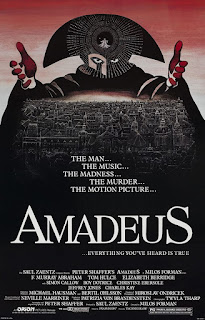
Will I be remembered after I'm gone? This is a question many people ask. In the 1984 movie Amadeus, Mozart's rival composer, Salieri, recounts his life-long obsession with composing music that will survive beyond his death. As portrayed in the movie, his obsession made him act in shameful ways. He became a dishonorable person. Then, approaching the end of his life, he despairs that Mozart's music has survived while his own music has gradually become extinct. 

When we listen to the great music of Mozart, we may marvel at how it has endured through time. As if Mozart is somehow still with us. Perhaps immortality is possible after all. But the truth is, Mozart is gone. He died in 1791. No good nor harm can come to him now. So it is of little use to Mozart that people still listen to his music. It means nothing to him.

What matters then? Perhaps not that you have posthumous fame. You will never know. What matters is how you live your life right now. If you enjoy creating music, do your best - not so that you can benefit from it being remembered for hundreds of years, but because of the impact it has on you and the people of this time. Live a just and admirable life. Make yourself into the best human you can be right now. That is what counts.